
In February 2026 British Trams Online featured an appeal from the Shipley Glen Tramway for emergency funds to repair its weather-damaged infrastructure. The Shipley Glen line is not one that appears much on this website, mainly because it is in fact a narrow gauge funicular and not really a tramway at all. But in this article Donald Brooks takes a look at the line “Then and Now” which is operating once again this year.
Happily there was enough response to the appeal to allow the line to reopen for the 2026 season in March after the most essential elements of the work had been completed. Since the 1960s the tramway has led something of a hand-to-mouth existence, with occasional closures and breaks in service, so the news that it is operational again is very welcome, particularly as it has changed very little since its opening in 1895 as a double track 20” (508mm) gauge route. One major development in 1928, though, was the move to powering the winding gear by electricity instead of the original producer gas system.
Because Bradford and the surrounding woollen towns are a long way from the seaside, the only day excursion possibility for late nineteenth century mill workers was to the nearby Pennine moors. Shipley Glen provided an easily accessible beauty spot, just across the River Aire and Leeds-Liverpool Canal from Saltaire railway station, and the construction of the tramway meant that visitors no longer even needed to climb to reach the open countryside. As well as the fresh air and extensive views of Baildon Moor, the upper station of the tramway provided direct access to other attractions including fairground rides, the last of which closed as recently as 2005.
In fact it is scarcely a major effort to reach the moor on foot. The tramway is roughly 400m long and climbs about 50m on gradients varying between 1 in 7 and 1 in 20, the journey up the heavily wooded hillside taking just a couple of minutes in the canopied four-wheel cars. Today these operate singly, one in red livery, the other in blue, but in the past two-car operation appears to have been the norm. It is the cars that perhaps provide some slight justification for calling the line a tramway as they are of very light construction, with passengers accommodated on tramway-style wooden reversible cross-bench seats.
Since 2002 a charitable trust has run the line and all staff are volunteers. Though there have been some changes over the years, as the photos show, Shipley Glen provides a much more authentic railway heritage experience than many lines that are a lot longer and far better known. Visitors are encouraged to explore the history of the tramway, the glen and its Victorian attractions in the museum just below the bottom station, which contains a replica of one of the original ‘trams’. It had larger wheels on one axle than the other to keep the floor more level, whereas today’s cars run parallel to the track on equal-sized wheels. Travelling on the line helps ensure its future – but non-visitors can also help as the emergency fund remains open. £35,000 has been raised so far but another £30,000 is still needed. Donations can be made on the tramway website or when visiting the line, which runs 12.00 to 16.00 on Saturdays and Sundays, though off-season visitors are advised to check in advance.
- More information on the Shipley Glen Tramway website at https://shipleyglentramway.co.uk/
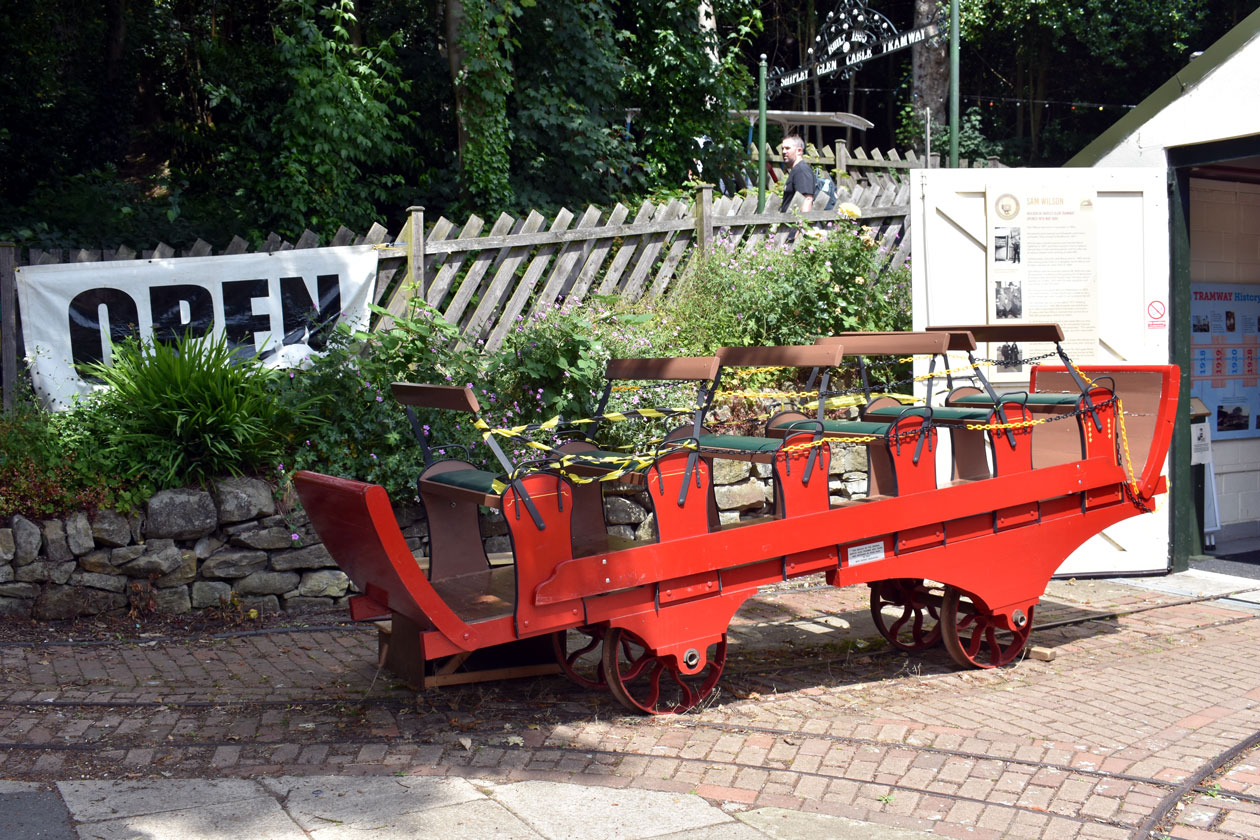
A replica of one of the original Shipley Glen cars outside the museum building on 21st June 2026. Although unsprung it benefitted from some padding on the bench seats. The museum building was constructed in the late 1980s and one of its intended purposes was as the depot for a planned horse tramway in the adjacent field. Although this would have provided more justification for the ‘tramway’ title it was never built. The lower funicular station is approached through the ornate entrance above the museum, with the canopy of one of the cars just visible in the station platform.
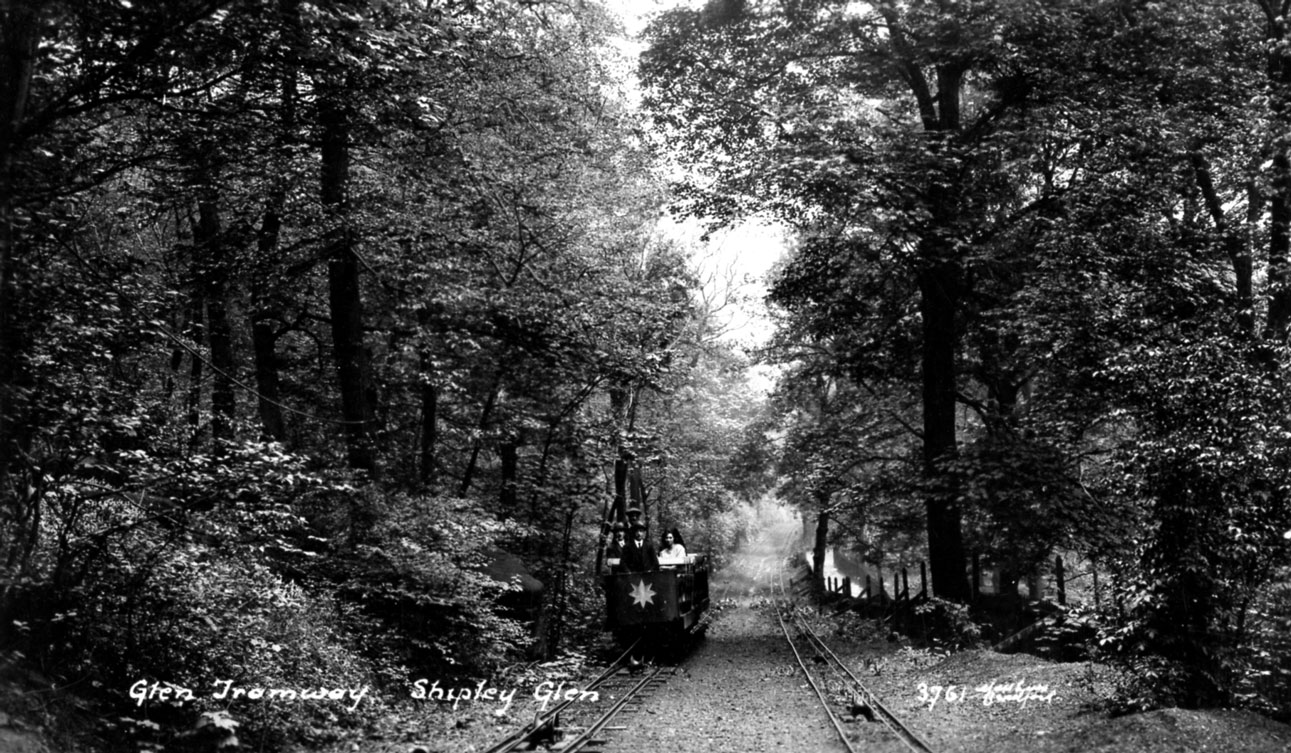
An early postcard of a train approaching the top station through Walker Wood. Although undated it shows the second generation of stock so must be later than 1905-07 when the cars were built. The parallel track up the densely-wooded glen is clearly visible on the right and can easily be walked in ten minutes. (Photograph Keith Chester collection)
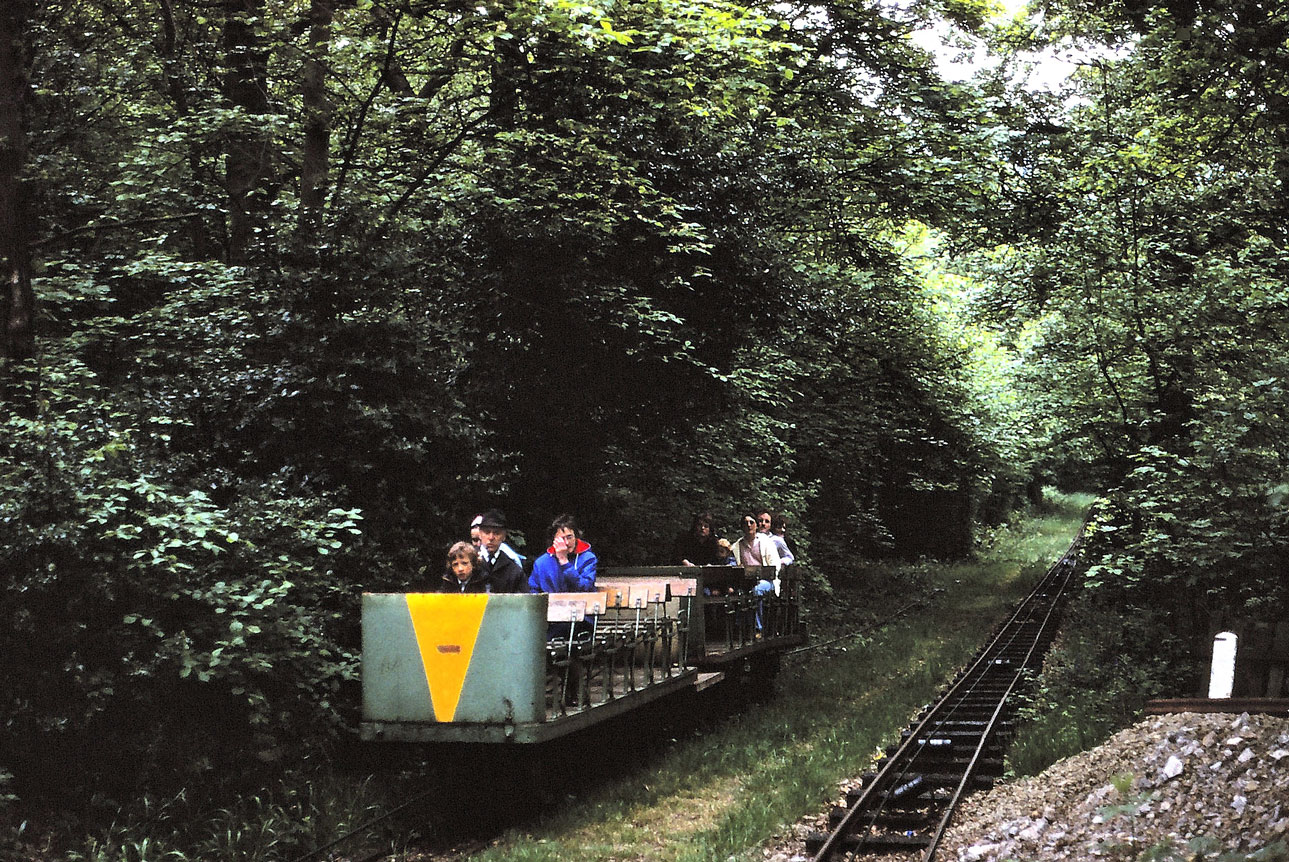
Little has changed as a two-car train approaches the upper terminus on 26th May 1980. The line had closed as a result of an accident in 1966, not reopening until 1969 when the green and yellow livery was adopted, perhaps in an attempt to project a more modern image than the traditional star. The stock looks very tired and although the track on the right has been recently relaid the one on which the train is travelling has not, providing plenty of narrow gauge charm.
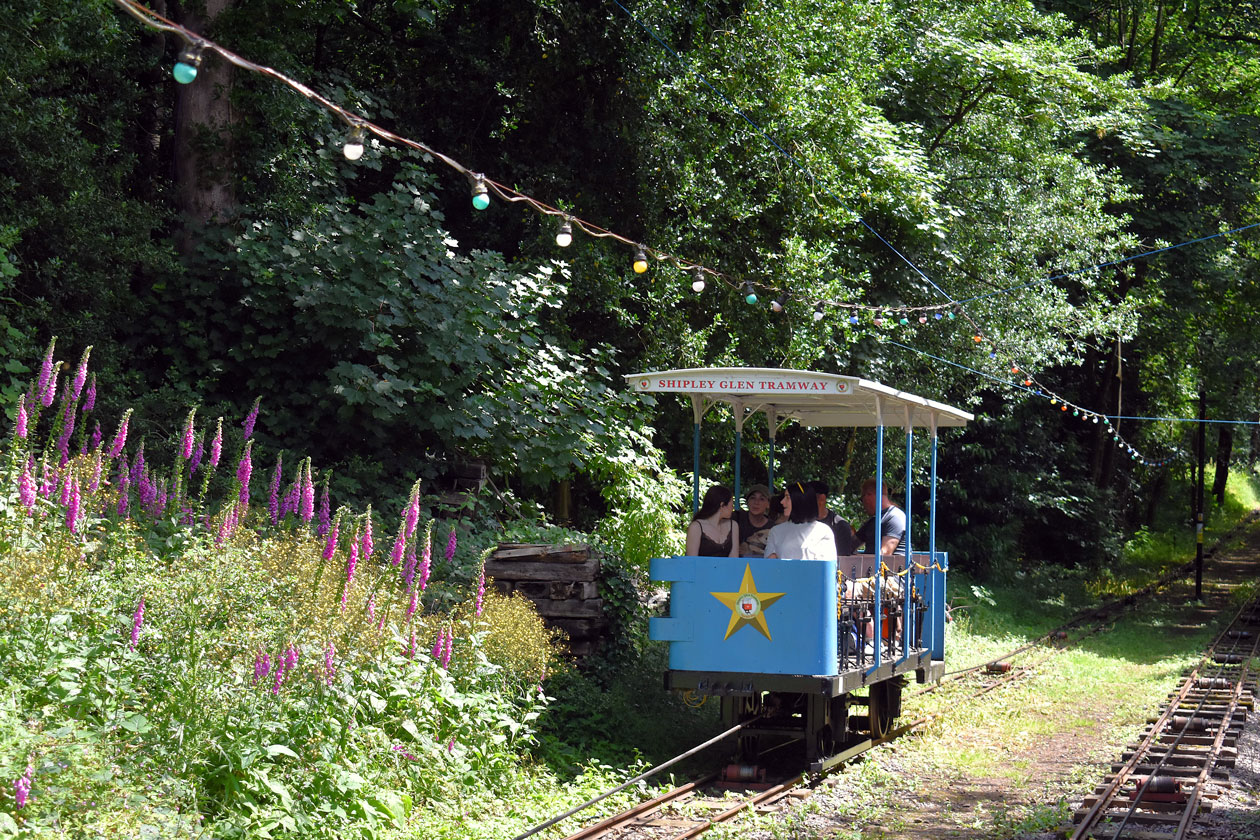
Even in 2026 (21st June) the left-hand track looks slightly overgrown, though the ‘blue’ car, with its safety chains fastened, is very smart and its frame is very straight. The cars, which were last rebuilt in 2010, probably had their canopies added in the early 1990s. The string of coloured lights between the tracks enhances the experience of a ride on the tramway’s Santa Specials – one of the few occasions when prebooking is necessary.
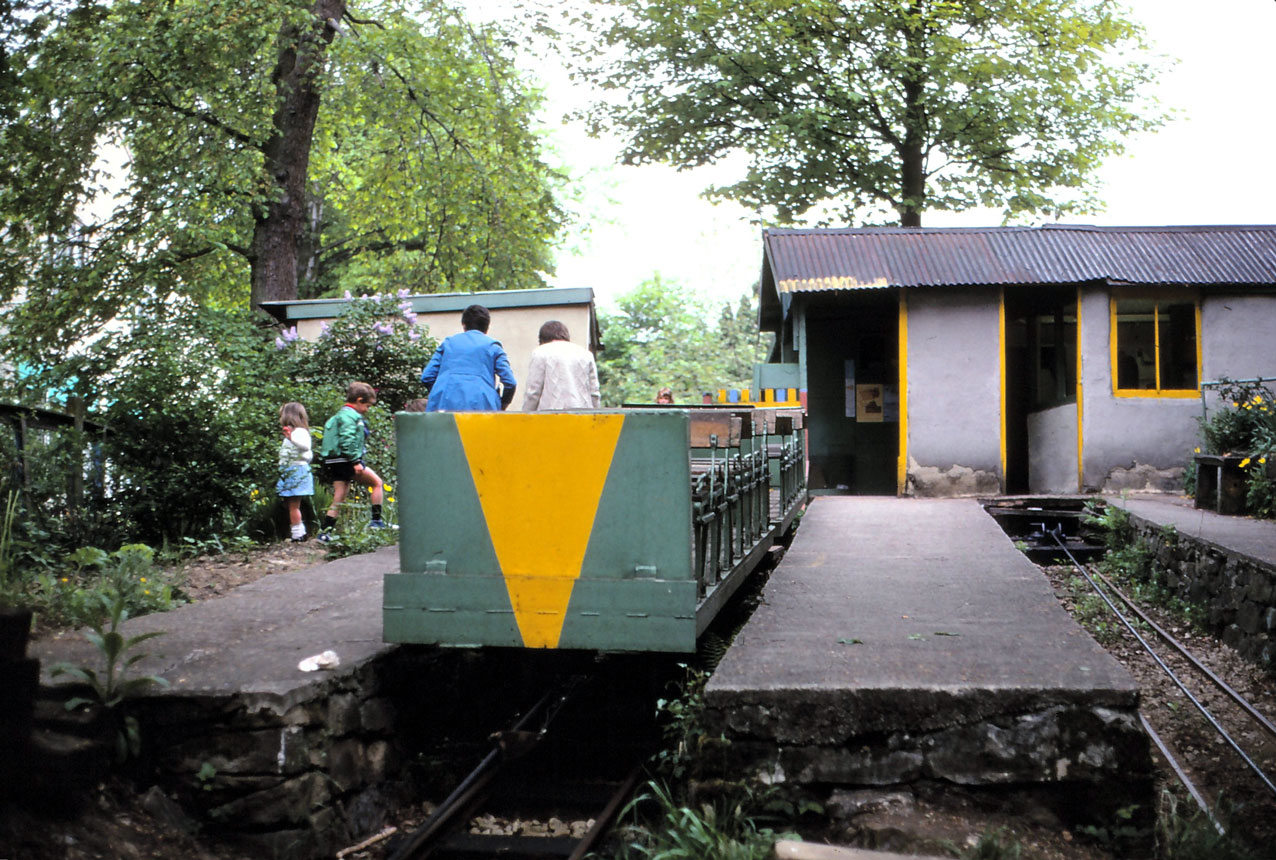
The entire operation had a down-at-heel appearance in 1980 (this was 26th May 1980), but at least it kept going. This is the upper station, where walking on to the tracks for a photo would be discouraged today. The glen attractions were just off to the left but sadly there is now no trace left, with the whole area occupied by housing.
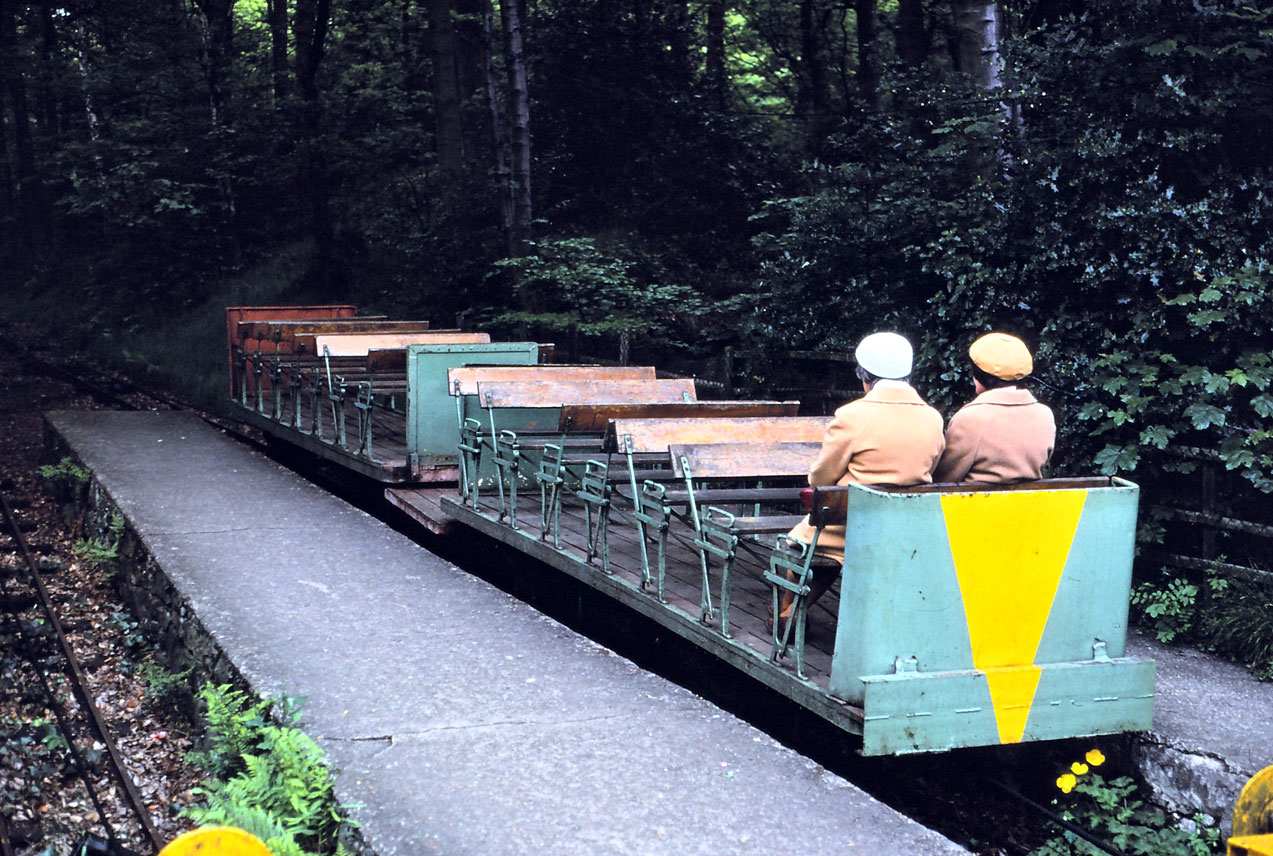
Two traditionally-attired older ladies wait patiently for their late spring trip on 26th May 1980 up the glen at the bottom station. If the cars looked longer in those days, they were fitted with seven benches rather than today’s six and were open on both sides as well as to the elements.
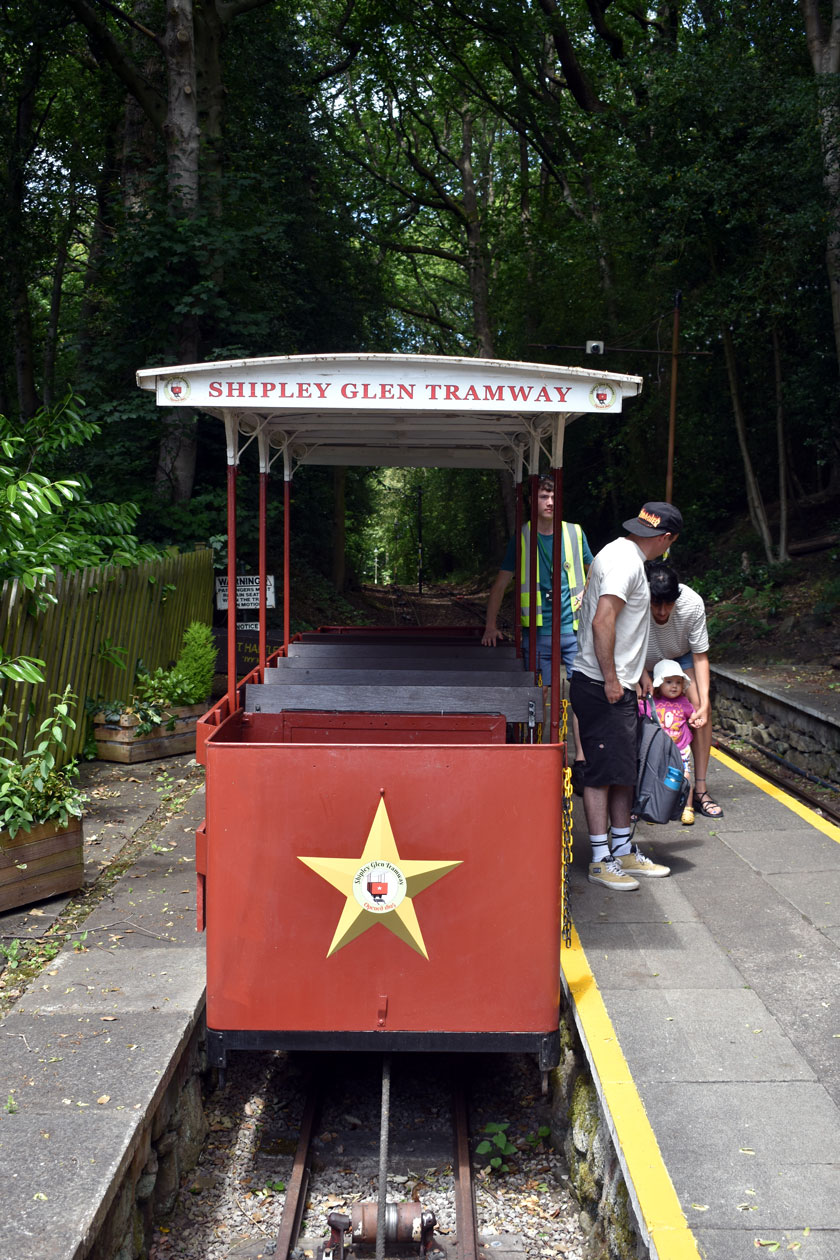
Almost half a century on and the dress code for tram travel has become rather less formal. In all essentials the bottom station remains much the same as ever, though it has been much smartened up and the platform edged in yellow. Access to the platform is provided only when boarding and alighting and only the centre platform is used by passengers now. Just the inward-facing side of each car is open for boarding and is secured by safety chains, fastened by volunteer staff, for the journey. This means that the two cars have opposite sides open, with the other side of the car made inaccessible by metal strips. (All Photographs by Donald Brooks unless stated otherwise)